
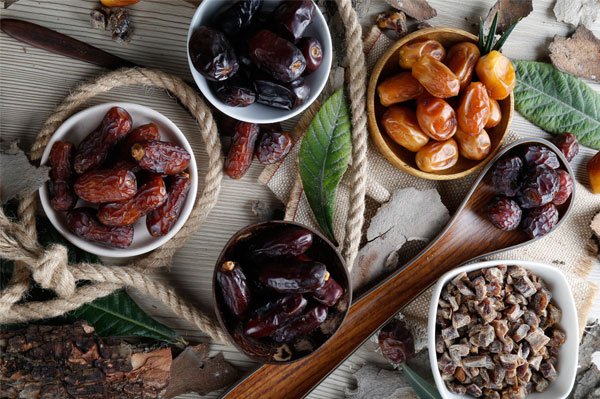
Ask three people about Harga Kurma and you may get three different answers, because each of them is pricing a different pack. A 1kg pack, a 5kg pack and a pack of twelve 600g packets are all "a price for kurma", and none of them can be compared until you bring them down to ringgit per kilo. This guide does exactly that with real numbers. Every price below comes from one Malaysian wholesaler's list, checked in November 2026. Other sellers will differ, and stock can change at any time.
What actually moves harga kurma in Malaysia
Start with one fact. Malaysia has no commercial date-growing trade, so every date sold here is imported.
On the list I checked, four things shifted the price clearly: the variety, the grade, the pack size, and whether the item was in stock at all. Each of them is easy to see once the numbers sit side by side.
Variety
The spread between varieties is wide. Among in-stock packs, Mariami A Normal in a 5kg pack worked out at RM15 a kilo, while the Medjool packs in stock ran from RM56 to RM77.78 a kilo. That is a five-fold gap for fruit sold under the same word, kurma.
FAO's chapter on date harvesting gives some background on Medjool. It describes how Medjool bunches are wrapped in shade net or cloth bags and picked carefully from underneath, and calls this "very labour-intensive and costly", adding that "the high price fetched by this fruit justifies the process." The same chapter notes that skin separation is more serious in varieties such as Medjool, "significantly lowering the price for export fruit."
Grade
Grades such as A, AA, AAA and Jumbo are each importer's own size sorting, not an international standard. On the list I checked, the Safawi grades did line up neatly with price. Here are the five Safawi 5kg packs, all in stock when I checked.
| Safawi pack (name as listed) | Pack price | RM per kg |
|---|---|---|
| Safawi Premium A No.2 (Mini) 2026 [5kg] | RM80 | RM16.00 |
| Safawi Premium A No.1 (Small) 2026 - 5kg | RM95 | RM19.00 |
| Safawi Premium AA - 5kg | RM153 | RM30.60 |
| Safawi Premium AAA - 5kg | RM163 | RM32.60 |
| Safawi Premium Jumbo - 5kg | RM195 | RM39.00 |
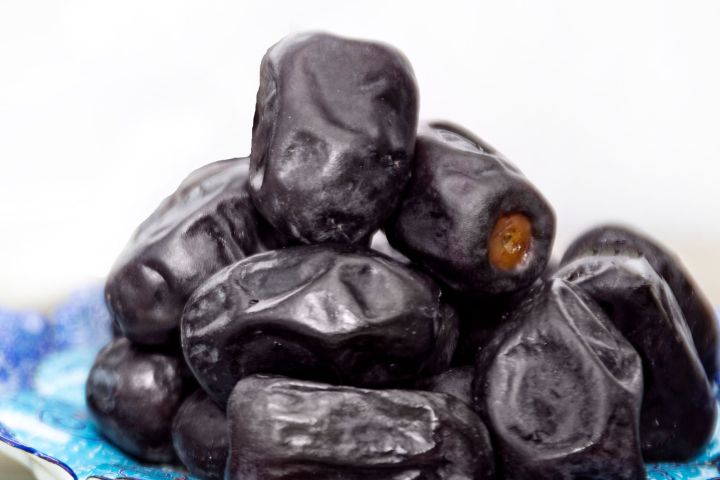
Same variety, same weight, and the top pack costs nearly two and a half times the bottom one. Safawi comes from the Madinah region of Saudi Arabia; it is longer than Ajwa, dark brown to black, soft and chewy. Since the letter reflects size sorting, a smaller grade is still the same variety.
Pack size
On this list, bigger in-stock packs were cheaper per kilo for the Safawi and Ajwa pairs below, but not for every Medjool pack. A 1kg Safawi A pack cost RM35 while the Safawi Premium A No.1 (Small) 5kg pack came to RM19 a kilo. A 1kg Ajwa A pack was RM31, against RM23 a kilo for the Ajwa Premium A No.1 (Small) 5kg. The grade names in each pair are not identical, so treat these as rough comparisons.
Medjool runs the other way in places. The 5kg Premium Jumbo pack was RM280, or RM56 a kilo, while the Jumbo pack of 8 × 900g cost RM448 for 7.2kg, which is RM62.22 a kilo. The single 900g Jumbo box was RM70, or RM77.78 a kilo. Smaller packets inside a bigger pack cost more per kilo here, so always do the division.
Stock
A price on a list is not a price you can pay if the line is sold out. The lowest per-kilo figures on the whole list belonged to out-of-stock rotab packs, covered below.
Kurma rotab prices: the cheapest per kilo, when you can get them
Rotab (rutab) is the soft, fresh-ripe stage of a date; tamar is the fully ripe, drier stage. Many soft varieties, Mazafati among them, are cold-chained, so kurma rotab is available year-round. Mazafati itself comes from Bam in Kerman province, Iran. It is dark, very soft, high in moisture, and needs to be kept in the fridge.
On the list, three rotab packs of 12 × 600g (7.2kg each) were priced at RM86, RM88 and RM90. That is RM11.94 to RM12.50 a kilo, the lowest per-kilo figures anywhere on the list. All three were out of stock when I checked, though. The one rotab line that was in stock, Rotab Sukkary Premium 3kg, cost RM63, or RM21 a kilo. Sukari is a golden-amber, very sweet date from Al-Qassim in Saudi Arabia, sold either soft as rutab or drier.
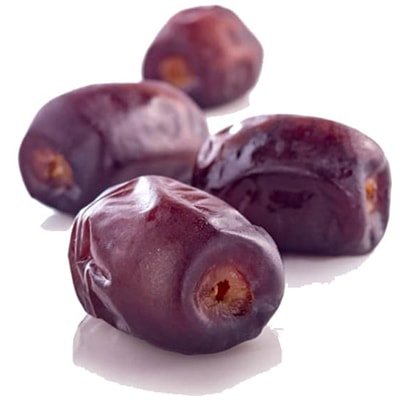
Why does rotab need careful handling at all? FAO's harvesting chapter says rutab "has three serious setbacks": it is produced in short periods with production peaks, it is highly perishable, and it is delicate, "which makes handling and transport difficult and expensive." The same source says temperature is "an important factor in the preservation of the quality of the fruit, especially for fresh dates at Khalal or Rutab stage." For buyers, the practical point is simple: keep kurma rotab cold from the moment it arrives. There is more on prices for this stage in our rotab price check by kilo and by pack, and on how rotab and tamar differ in storage in the rotab and tamar guide.
Date varieties and price ranges
Here is how five varieties compare on the list. Ranges cover in-stock packs only, and the count is the number of in-stock packs of each.
| Variety | Origin | In-stock packs on the list | RM per kg (in stock) |
|---|---|---|---|
| Mariami | Iran | 4 | RM15.00 to RM40.00 |
| Deglet Noor | Tunisia / Algeria | 1 | RM18.33 |
| Safawi | Madinah region, Saudi Arabia | 7 | RM16.00 to RM45.00 |
| Ajwa | Madinah, Saudi Arabia | 5 | RM23.00 to RM44.00 |
| Medjool | Palestine (as labelled) | 5 | RM56.00 to RM77.78 |
Medjool is large and very soft with a rich caramel taste. It originated in Morocco, and the packs on this list are labelled Palestine. Deglet Noor is golden, translucent and semi-dry, from Tunisia or Algeria; when it is sold on the stem in Malaysia it is called kurma tangkai. The one Deglet Noor pack in stock was 12 packets of 400g with stems, RM88 for 4.8kg. Zahidi, another name you may come across, did not appear on the list at all, so I cannot give you a price for it.
For more on what each variety looks and tastes like, see this overview of date varieties.
Comparing prices and quality without getting caught out
The fairest comparison is ringgit per kilo for the same variety and similar grade, using items that are actually in stock. Divide the pack price by the net weight. RM88 for 4.8kg is RM18.33 a kilo; RM448 for 7.2kg is RM62.22. Do this for every quote and the numbers start to mean something.
Check what the pack says about where the fruit is from. FAO lists the information that should be printed on export packaging: net weight, country of origin, who grew and packed it, the product and variety, and the category or grade. If a quote or a pack leaves out the net weight or the origin, ask before you pay.
Think about timing too. Demand peaks before and during Ramadan, and Hari Raya, weddings (hantaran), kenduri and umrah gifts are other busy periods. Gulf and Middle-East dates are mostly harvested from late summer to autumn, roughly August to November, and new-season stock reaches Malaysia some weeks later. If you plan to serve dates at an event, there are ideas in our pieces on traditional dishes and desserts with dates and date appetizers.
Quick answers
Which dates were cheapest per kilo?
Among in-stock packs, Mariami A Normal 5kg at RM75, or RM15 a kilo. The three 600g rotab packs were cheaper per kilo on paper but out of stock.
Is a 5kg pack always cheaper per kilo than 1kg?
For the Safawi and Ajwa pairs above, yes. For Medjool, the 8 × 900g pack cost more per kilo than the 5kg pack, so check each one.
Why is Medjool so much dearer?
FAO describes Medjool harvesting as labour-intensive and costly, justified by the high price the fruit fetches. On this list, in-stock Medjool ran from RM56 to RM77.78 a kilo.
Harga kurma only makes sense once it is a price per kilo for a pack you can actually buy today. Get those two things right and the rest of the comparison is arithmetic.