

Rotab is the soft, fresh-ripe date, and it behaves differently in a pan or a blender from the drier dates most people keep in a jar. If you buy kurma rotab for cooking, it helps to know what you are holding first. The fruit is wet, sticky and quick to spoil. That makes it easy to mash and awkward to keep.
This guide sticks to what a home cook can actually do with it: pitting, mashing into paste, sweetening sauces and desserts, a few savoury ideas, and storing what is left over. Where a fact comes from a published source, the source is named.
What rotab is, and why it matters in the kitchen
The word comes from the Arabic name for one stage of ripening. The FAO date palm handbook describes five stages, called hababouk, kimri, khalal, rutab and tamar. Rutab, it says, means "wet" and is also called the soft ripe stage. At this point the tip of the fruit turns brown or black and goes soft, and the date starts losing its astringency.
Tamar is the next and last stage. By then the date has lost most of its water, the skin wrinkles as the flesh shrinks, and the sugar is concentrated enough to stop fermentation. FAO calls it the best condition for storage. Rutab gets no such praise. The same handbook warns that unless rutab dates are cold stored, they quickly turn sour.
For the cook, that difference is the whole story. A tamar date usually needs soaking before it will blend smoothly. A rotab date is already soft enough to press flat with a fork.
The rotab varieties you are most likely to find
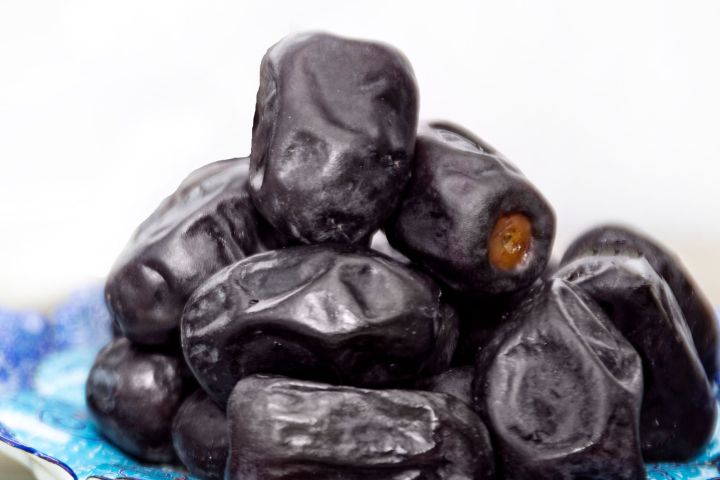
Mazafati is the variety behind labels such as "Rotab Mazafati Bam" and "kurma madu". It comes from Bam in Kerman province, Iran. These dates are dark, very soft and high in moisture, and they need refrigeration. Because Mazafati is cold-stored, this kurma rotab is sold all year.
Sukari, from Al-Qassim in Saudi Arabia, is golden-amber and very sweet. It is sold either soft as rutab or drier. Medjool is sold under its own name, but it is large and very soft with a rich caramel taste, so it does many of the same jobs in a recipe.
| Date | Origin | Texture | Handy for |
|---|---|---|---|
| Mazafati (rotab) | Bam, Kerman province, Iran | Dark, very soft, high moisture | Mashing straight into paste, sauces, smoothies |
| Sukari (rutab) | Al-Qassim, Saudi Arabia | Golden-amber, very sweet, soft | Desserts where you want a lighter colour |
| Medjool | Originated in Morocco; the packs priced below are from Palestine | Large, very soft, caramel taste | Stuffing whole, chopping into bakes |
| Any tamar-stage date | Varies | Drier, skin wrinkled | Long storage; soak before blending |
Prep first: stones and paste
Unless the pack says pitted, each date still has its stone, and rotab hides it well because the flesh is so soft. Slit each date lengthways with a small knife, open it like a book and lift the stone out. Do it over a bowl. The fruit is sticky, and the syrup on your fingers belongs in the recipe, not on the chopping board.
For a quick paste, put the pitted rotab in a bowl and work it with the back of a fork. Very soft Mazafati breaks down in a minute or two. If the dates have been in the fridge for a while and feel firmer, add a spoonful of warm water and leave them for a few minutes before mashing. A stick blender gives a smoother result if you are using the paste as a spread.
Paste is the base for almost everything below. Factories make a version of it too. FAO notes that date pastes can be used as fillings for cakes, and that the great advantage of commercial paste is a melting temperature higher than baking heat, so the filling does not run out of the cake. Homemade paste is not made to that standard, so keep it inside a pastry or bun rather than spread thin on top.
Sweet ways to use kurma rotab
The original version of this page suggested a chocolate sauce, and it is a good one. Warm a little milk or cream, stir in two or three spoonfuls of rotab paste until it dissolves, then add chopped dark chocolate off the heat. The dates bring sweetness and body, so you can taste before adding any sugar at all.
Pudding works the same way. Stir paste into a basic bread-and-butter pudding custard, or fold chopped rotab through sago or rice pudding near the end of cooking. Add it late. Long boiling turns small pieces into mush, which is fine for flavour and less nice to look at.
Smoothies are the easiest use of all. Two or three pitted rotab dates with banana, milk and ice blend without soaking. Taste before adding honey, because the dates may already be sweet enough.
FAO's bulletin on date palm products calls date syrup, known as dibs or rub, "probably the most common derived date product", and the handbook says the syrup is used to sweeten various foods. You can make a rough kitchen version by simmering chopped dates in water, straining, and reducing the liquid, though it will not keep like the factory product.
For more dessert ideas built on dates, see this collection of traditional dishes and desserts with dates.
Savoury cooking with rotab
FAO lists sauces for steak and chutney among processed date products, with the dates serving as a source of sugar and forming the body of the sauce. That is a useful clue for home cooking. Rotab can do the job of the brown sugar or kicap manis in a sticky glaze.
Try this with chicken or beef. Mash four or five pitted rotab dates with soy sauce, garlic, a squeeze of lime and some chilli. Rub it on the meat, then roast or grill. Watch it closely. Sweet glazes catch on a hot grill.
Chopped rotab also goes into rice. Stir a handful into a pilaf or nasi minyak in the last few minutes, along with toasted almonds, so the pieces warm through without collapsing. For a quick chutney, cook chopped rotab with onion, vinegar, ginger and a pinch of salt until thick.
Stuffed dates are the other classic. Rotab is often too soft to hold its shape around a filling, so Medjool or a firmer date is easier here. This piece on creative date appetizers has plenty of filling ideas.

What rotab costs for a cooking budget
Rotab is sold under a range of Rotab dates labels: some packs name the variety and grade, while others just say "rotab" (pack names in the table below). The prices below are from one Malaysian wholesaler, checked in November 2026.
| Pack (as listed) | Price | Stock when checked |
|---|---|---|
| Rotab Sukkary Premium, 3kg | RM63 | In stock |
| Rotab Mazafati AAA, 12 packs × 600g | RM86 | Out of stock |
| Rotab BAM AAA, 12 packs × 600g | RM88 | Out of stock |
| Rotab, 12 packs × 600g | RM90 | Out of stock |
| Medjool Palestin Jumbo, 900g box | RM70 | In stock |
The Sukkary pack works out at RM21 per kg. The 600g packs come twelve to a carton, so split a carton with friends if you only cook with dates now and then.
Storing rotab between recipes
Rotab is the opposite of a pantry food. FAO says that dates at every stage except tamar are perishable because of their high water content, and Mazafati in particular needs the fridge. Keep opened packs of kurma rotab chilled and sealed. If the dates start to smell sour or fizzy, they are fermenting and should go in the bin, not the pot.
Freezing is the long-term option. According to FAO's handbook, the temperature commonly used for long-term preservation of dates of several varieties, including Medjool, is −18°C, which also reduces sugar crystallisation and skin separation. At home, freeze rotab in recipe-sized portions so you only thaw what you need.
Quick questions
Can I swap rotab for dry dates in a recipe?
Yes. Kurma rotab is wetter than tamar-stage dates, so use a little less liquid elsewhere and skip the soaking step.
Why did my rotab turn sour in the cupboard?
Rutab dates sour quickly unless they are cold stored, FAO notes. Keep them in the fridge from the day you open the pack.
Is Mazafati rotab only around at certain times of year?
No. Mazafati is cold-stored and sold year-round, though individual packs do go in and out of stock.
More about this site is on the About Us page and the contact page.